Pollinator Fun Facts
Pollinator science and biology is extremely interesting. While pollinators are intrinsically linked to our own survival, we do not know many details about their lives. Fortunately, we don’t need to understand every detail about their biology and gene flow in order to protect them.
They need safe areas to nest and reproduce, abundant sources of nectar and pollen, and places free of harmful chemicals and pollution.
Here are a few interesting facts about pollinators to get you started on this life-long love for these species:
FUN FACT #1
The giant swallowtail (Papilio cresphontes) is the largest butterfly species in North America!
Perhaps the most astounding aspect of this species is the caterpillar stage. At first, the caterpillar looks like bird droppings (a type of mimicry), but once it feels threatened, it reveals a part of its body called the osmeterium, which is meant to look like the forked tongue of a snake!
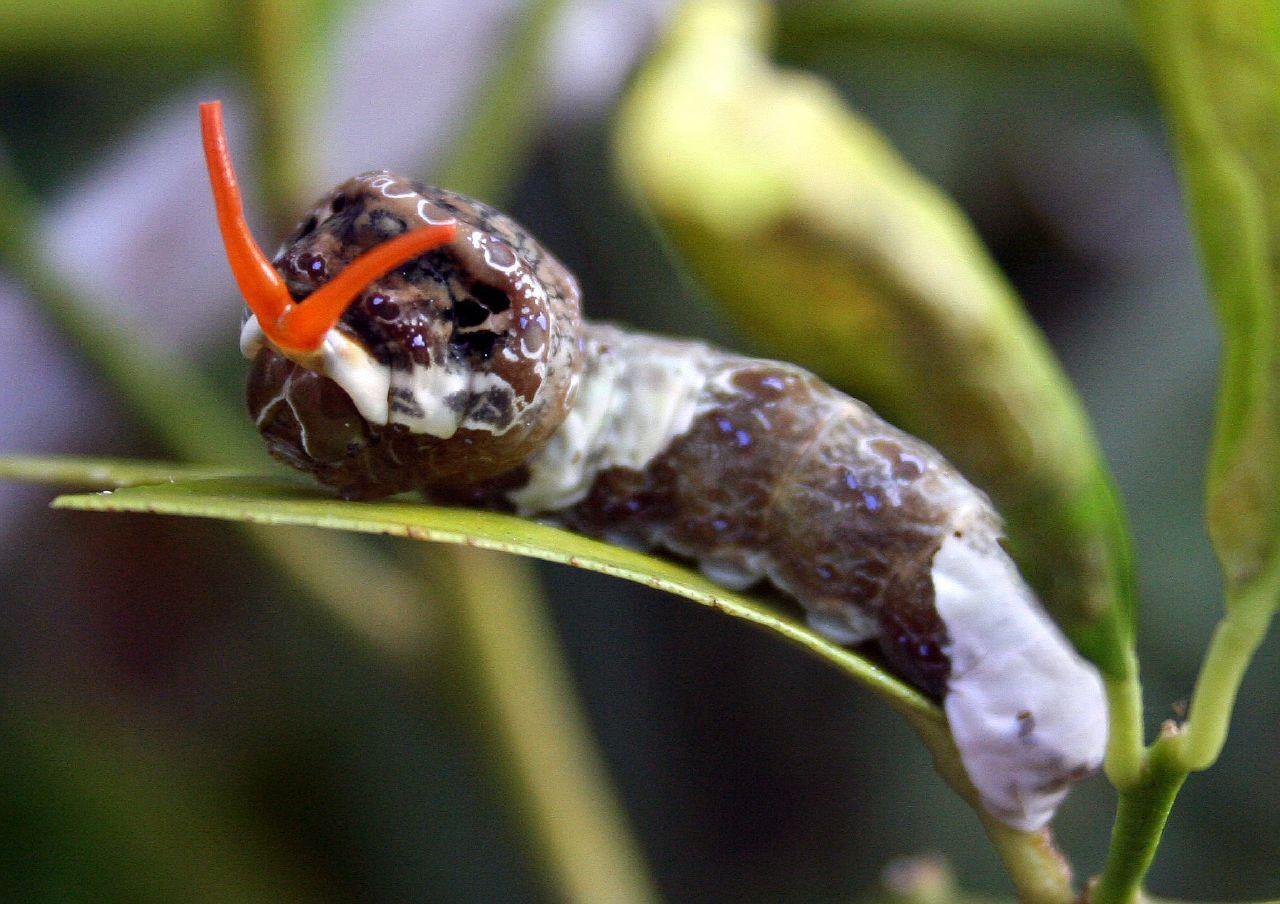
Photo: Giant Swallowtail Caterpillar by Elaine, courtesy of Flickr (CC BY-NC-ND 2.0)
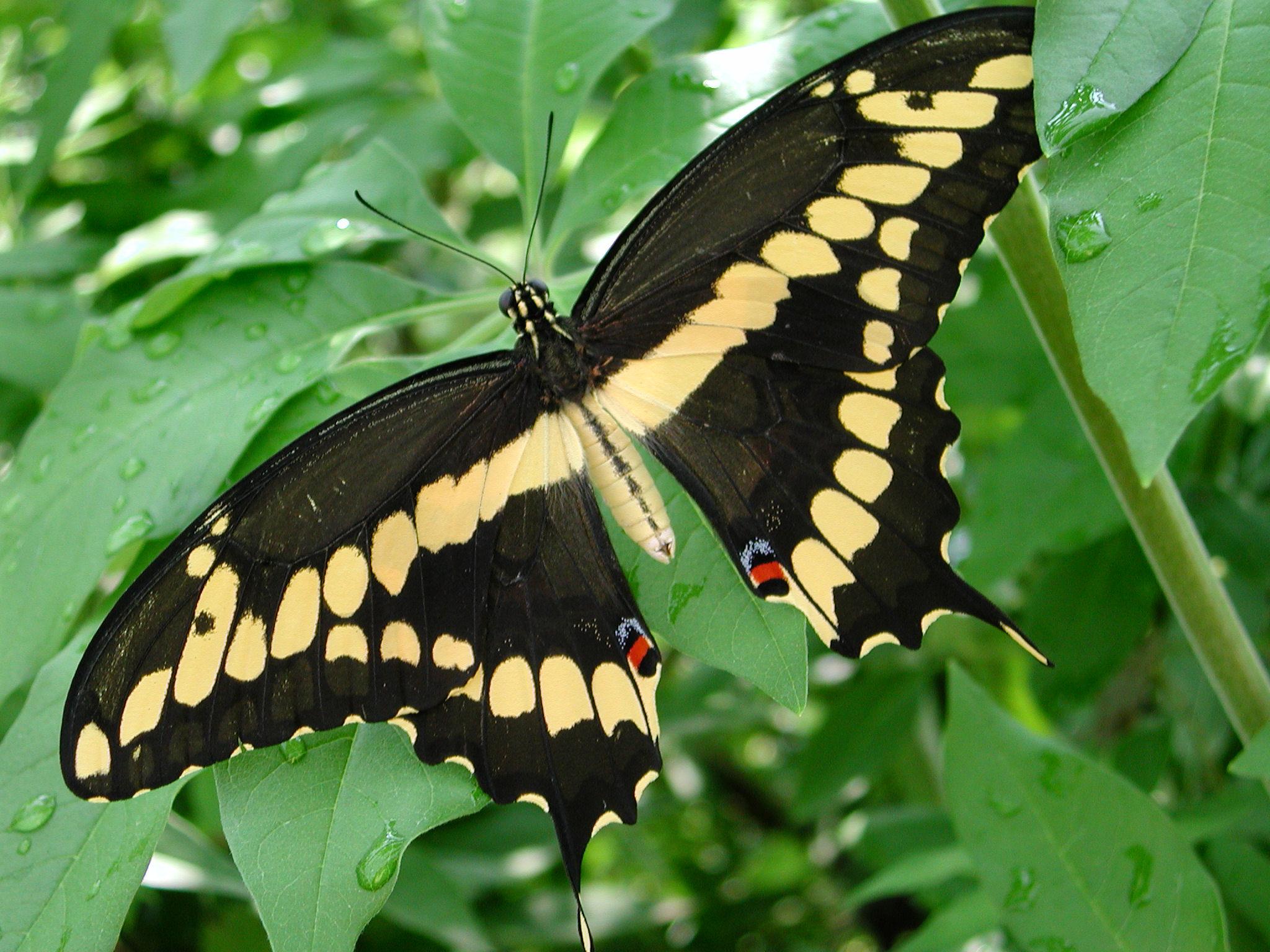
Photo: Giant Swallowtail Butterfly by Lollie Dot Com, courtesy of Flickr (CC BY-NC-ND 2.0)
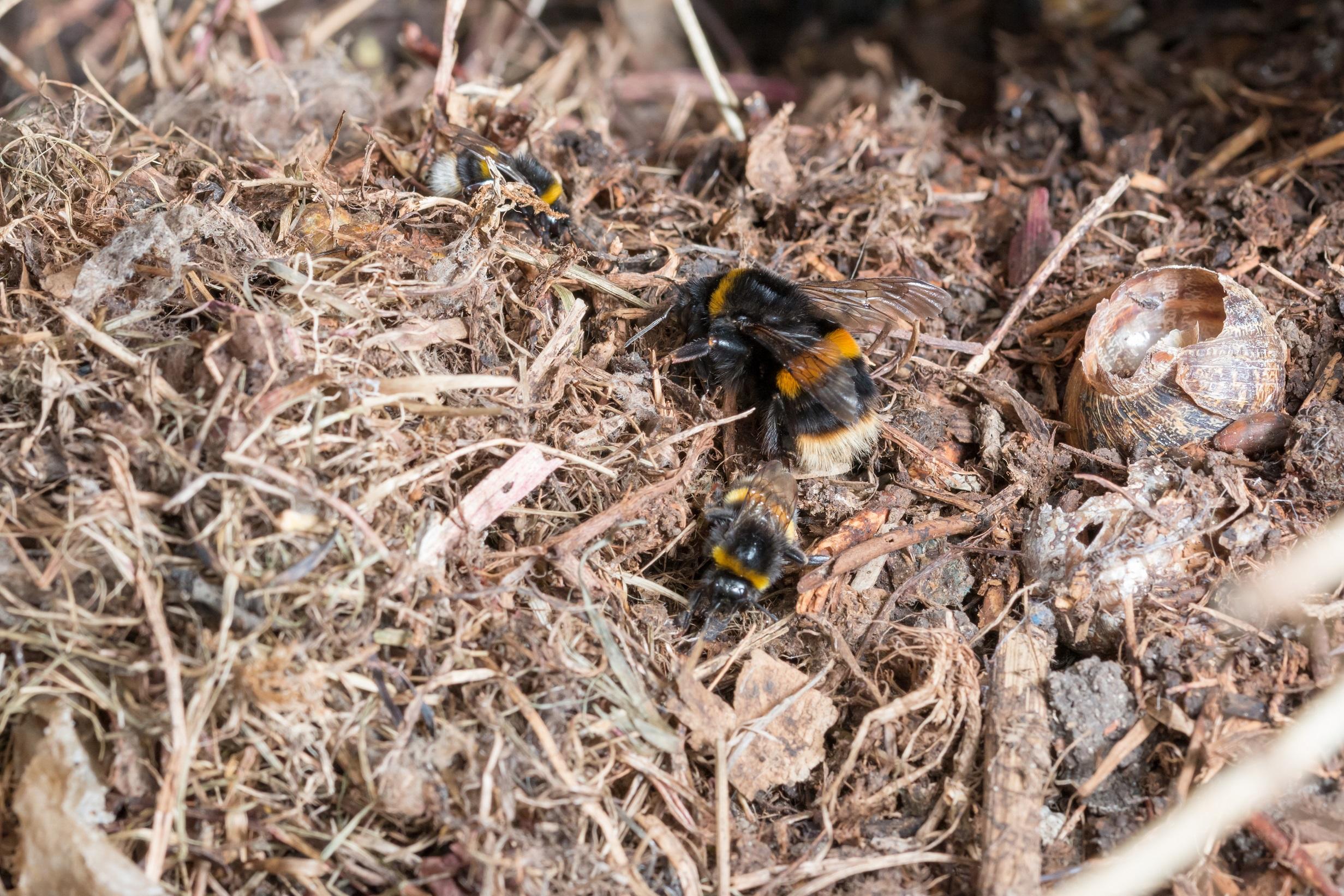
Photo: Bumble bee queen and workers by Mibby23, courtesy of Flickr (CC BY-NC 2.0)
FUN FACT #2
Did you know that future queen bumble bees are the only members of their colony to survive the winter?
Bumble bee colonies are annual, meaning that all the workers, drones, and even the previous year’s queen will naturally pass before the winter season once the colony has produced new queen bees. These new queens mate, forage for food, and then find a safe place to hibernate underground for the entire winter.
Keep an eye out for new queen bumble bees as they come out of hibernation and emerge from their overwintering burrows! Once emerged, new queens will establish nesting sites underground and lay a first round of eggs which will hatch into the first generation of worker bees.
Worker bees will help with nest maintenance, pollen and nectar collection, and the rearing of future generations of the colony.
FUN FACT #3
Pollination night and day shifts!
Pollinators are an incredibly diverse group of animals and insects. While many species are active during the day such as bees, birds, butterflies, wasps, and beetles, there are also many species that work tirelessly at night such as bats, moths, and honey possums!
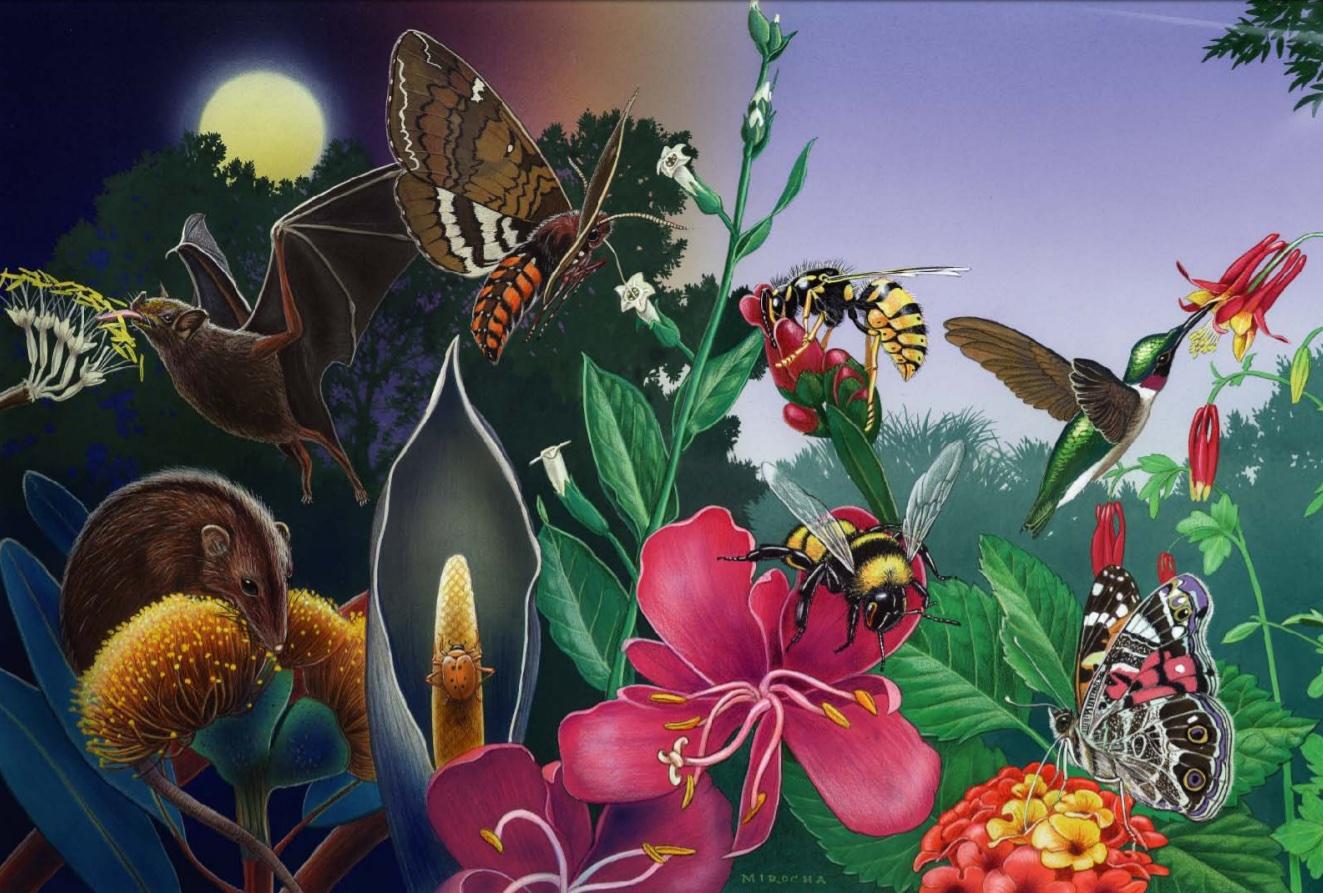
Artwork by Mirocha
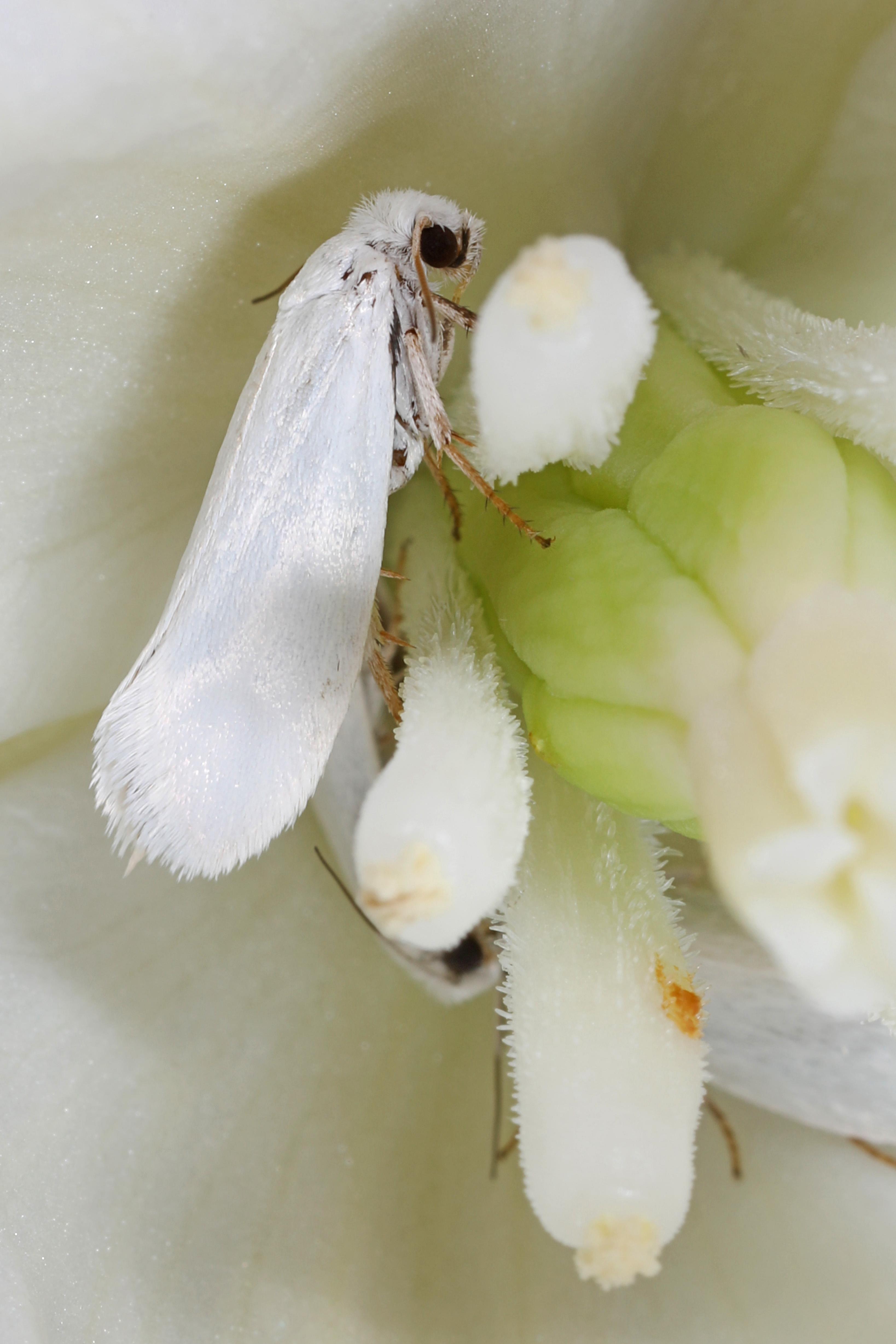
Photo: Yucca moth by Judy Gallagher, courtesy of Flickr (CC BY 2.0)
FUN FACT #4
Did you know that yucca moths and yucca plants are completely dependent on each other?
Yucca moths only lay their eggs inside yucca plants, and yucca plants are only pollinated by specialist yucca moths. Yucca moths are native to the southwestern United States and have an interesting life history. Male and female moths emerge in the spring as yucca plants start to bloom. Once they mate, the female moth uses special tentacles around her mouth to gather pollen from the anthers of yucca flowers. She then flies to another yucca plant which she pollinates by transferring the pollen she collected to the stigma of the new flower. Once this is completed, she lays her eggs inside the flower which develop into caterpillars that feed on the seeds and fruit provided by the fertilized yucca flower. Female yucca moths have the incredible ability to sense if the flowers they are visiting have already been visited by other moths. This ensures that the flower she lays her eggs on will produce enough food for her developing caterpillars, and prevents too many caterpillars from hatching on the same flower and running out of food. This is good for the moths, and is also beneficial for the yucca plant, since there are still seeds leftover once the caterpillars mature that can get dispersed and grow into new plants.
FUN FACT #5
Honey possums (Tarsipes rostratus) are tiny nectivorous mammals that are native to Australia and weigh only 7 to 10 grams! Honey possums are fantastic nocturnal pollinators and use their crafty feet and tail to hang from branches in search of sweet nectar from Banksia, Eucalyptus, and other native flowers. They have long furry snouts that get covered in pollen when feeding, and have long tongues with bristles perfect for lathering nectar from the flowers they are visiting.
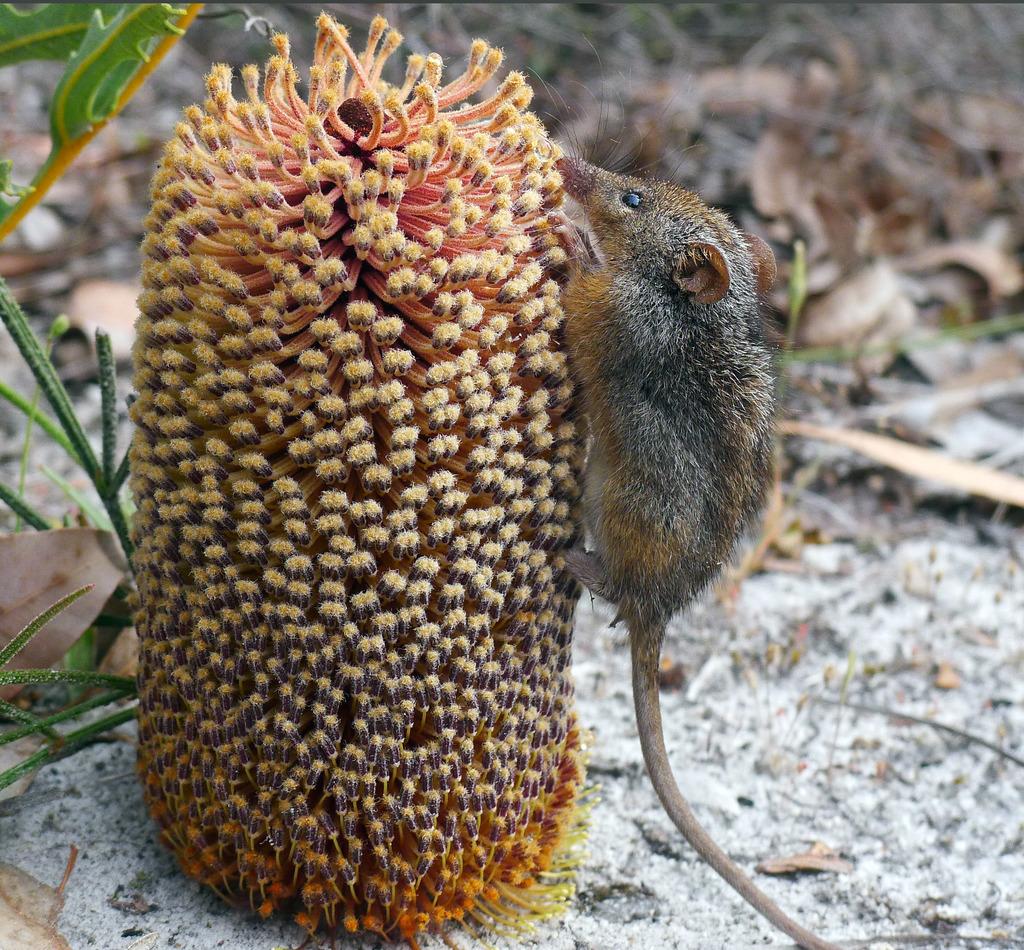
Photo: Honey Possum by Bo Janmaat, courtesy of iNaturalist Australia (CC BY-NC 4.0)
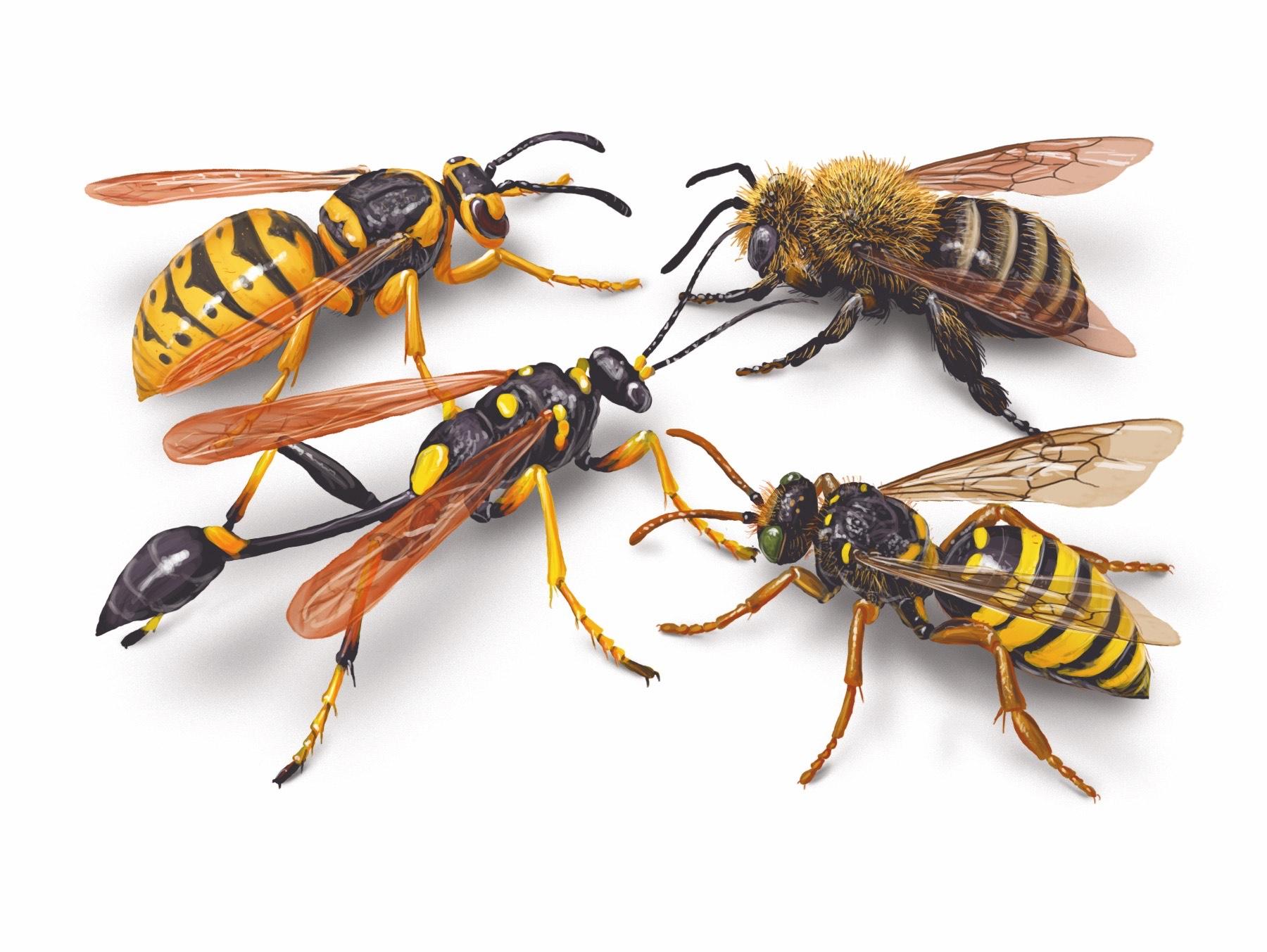
Artwork by Steve Buchanan
FUN FACT #6
Did you know that bees descended from wasps?
Wasps are carnivores that prey on other insects for food. They are considered beneficial insects as many species feed on pests and use pest insects as food for their brood. Over 100 million years ago, some wasps made a diet switch from insects to protein-rich pollen produced by flowers. These wasps required different features in order to efficiently gather pollen, and evolved over time to meet these requirements, ultimately becoming vegetarian bees.
With bees and flowers evolving together in co-evolution, we now have the beautiful and spectacular diversity of flowers and bees seen today! As seen in the picture, bees (right side) have specialized hairs on their bodies that are excellent at collecting pollen from flowers, whereas wasps (left side) have smooth aerodynamic bodies made for hunting and catching prey.
FUN FACT #7
The arctic bumble bee (Bombus polaris) is found in Alaska, northern Canada, northern Scandinavia, and Russia. These large bumble bees are able to survive in a harsh cold climate by having dense thick hair or 'fur' that retains body heat, and can even be found sunbathing in conical flowers on sunny days to regulate their body temperature. They also have the ability to vibrate their flight muscles to warm themselves, and can increase their internal body temperature to as high as 38 degrees Celsius and 100 degrees Fahrenheit so that they are able to fly and forage for pollen and nectar when other insects are still frozen. The arctic bumble bee is a key pollinator of many northern species of plants including arctic willow, arctic rose, red current, and arctic poppy.
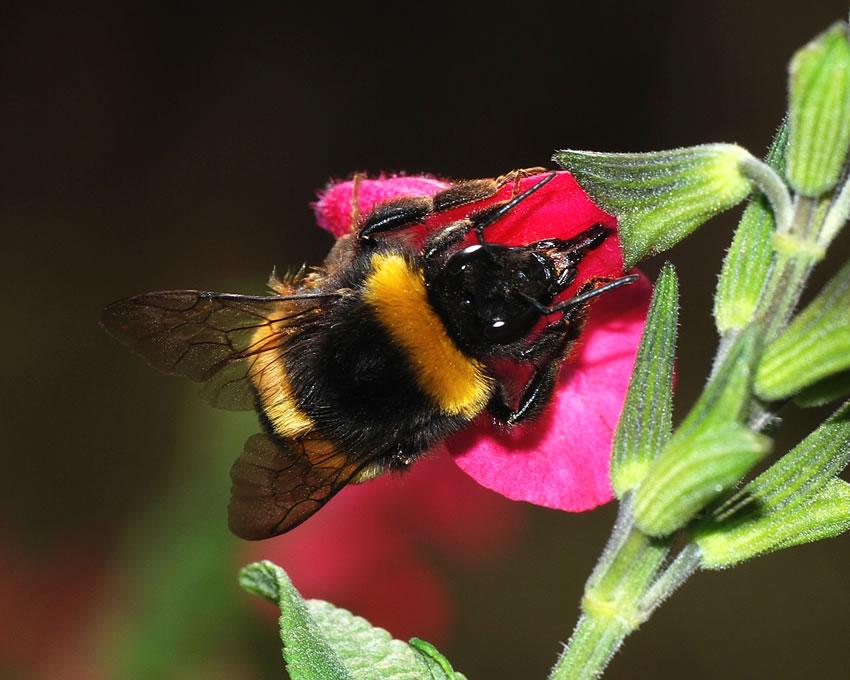
Photo: Arctic bumble bee feeding on a flower blossom, by Joaquim Alves Gaspar, from Wikimedia
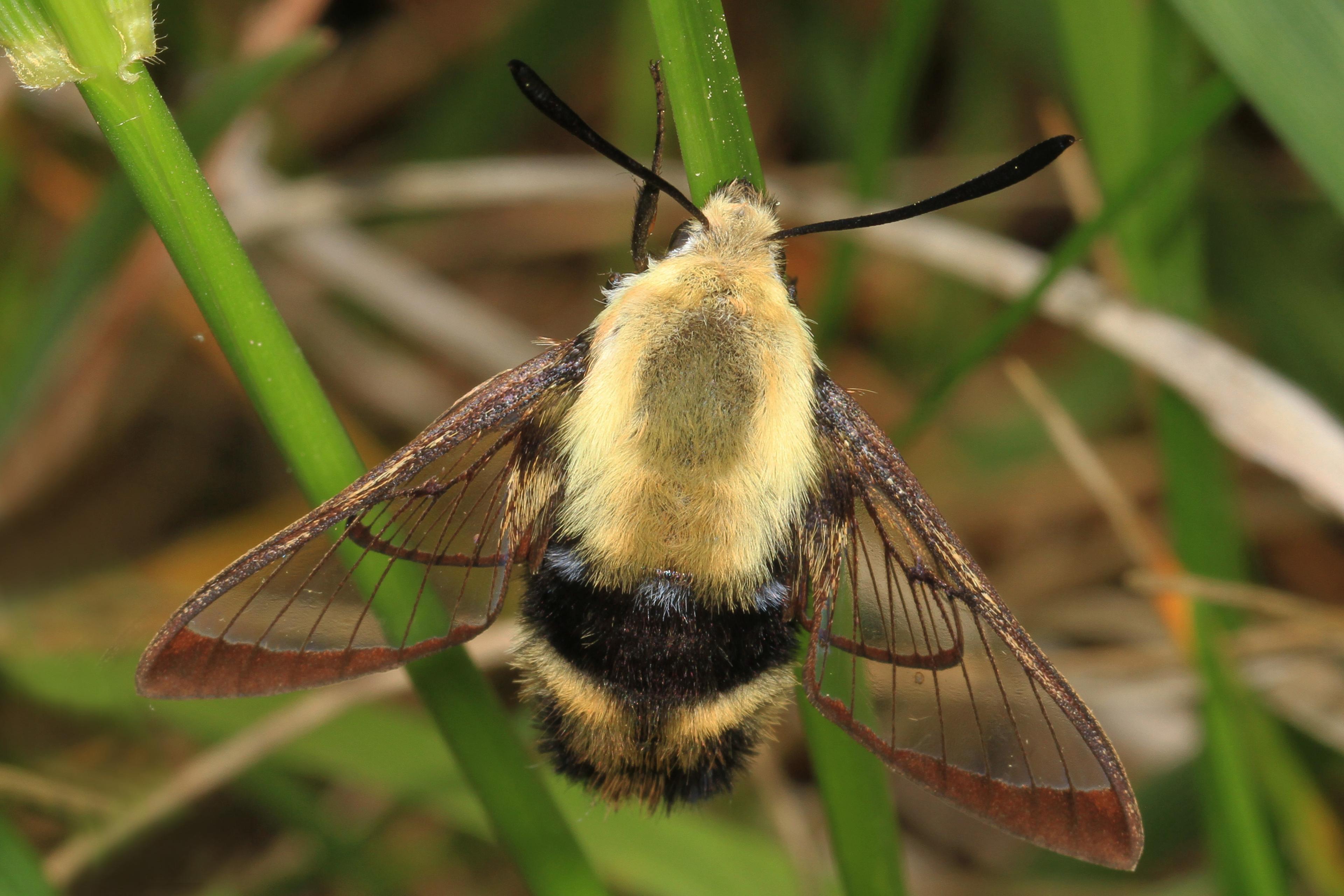
Photo: Snowberry clearwing by Judy Gallagher, courtesy of Flickr (CC BY 2.0)
FUN FACT #8
Snowberry Clearwing moths (Hemaris diffinis) are widespread, ranging from northern Mexico to Southern Canada. Their mimicry of bumblebees is a defensive adaptation, as it confuses predators into thinking the clearwing might sting. As a day-flier, they pollinate numerous flowers including snowberry, honeysuckle, and blue star.
FUN FACT #9
Leaving old fallen trees, logs, branches, and leaves can benefit many cavity and ground nesting bees!
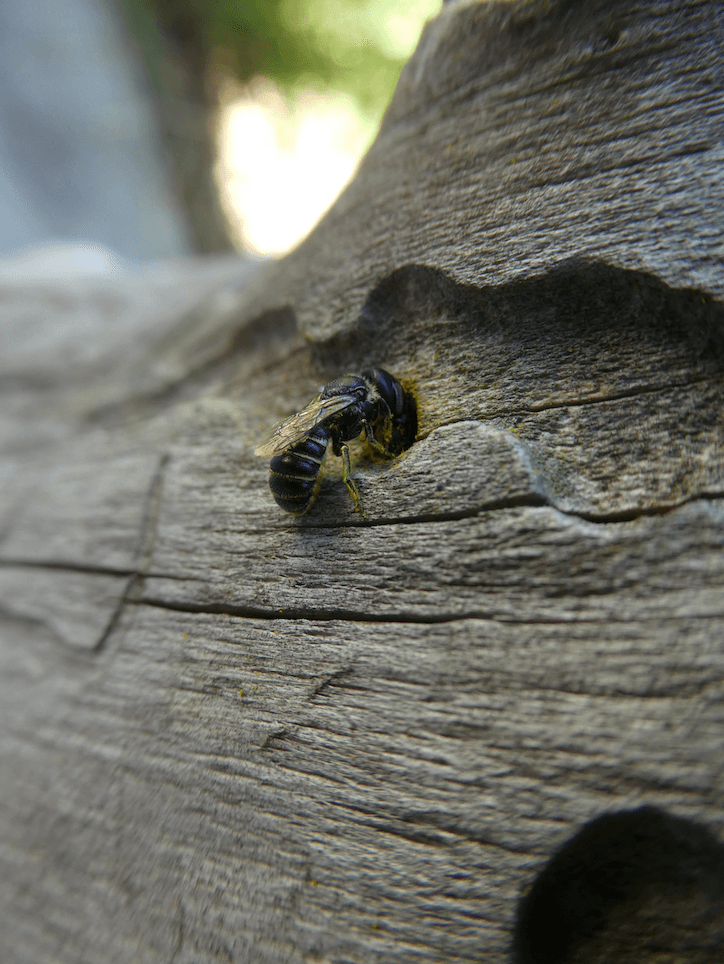
Leafcutter bee nest, by Amber Barnes
FUN FACT #10
Flower flies (Syrphidae family) are excellent bee mimics! They are an important group of pollinators that also play a key role in biocontrol as the larvae of many species feed on crop-damaging aphids.
Flower flies mimic bees as a form of protection against predators, and can be distinguished from bees by having only 2 wings, short and stubbier antennae, and larger eyes that cover most of their head.
Keep an eye out for these amazing insects zipping and hovering around your garden flowers this spring and summer!
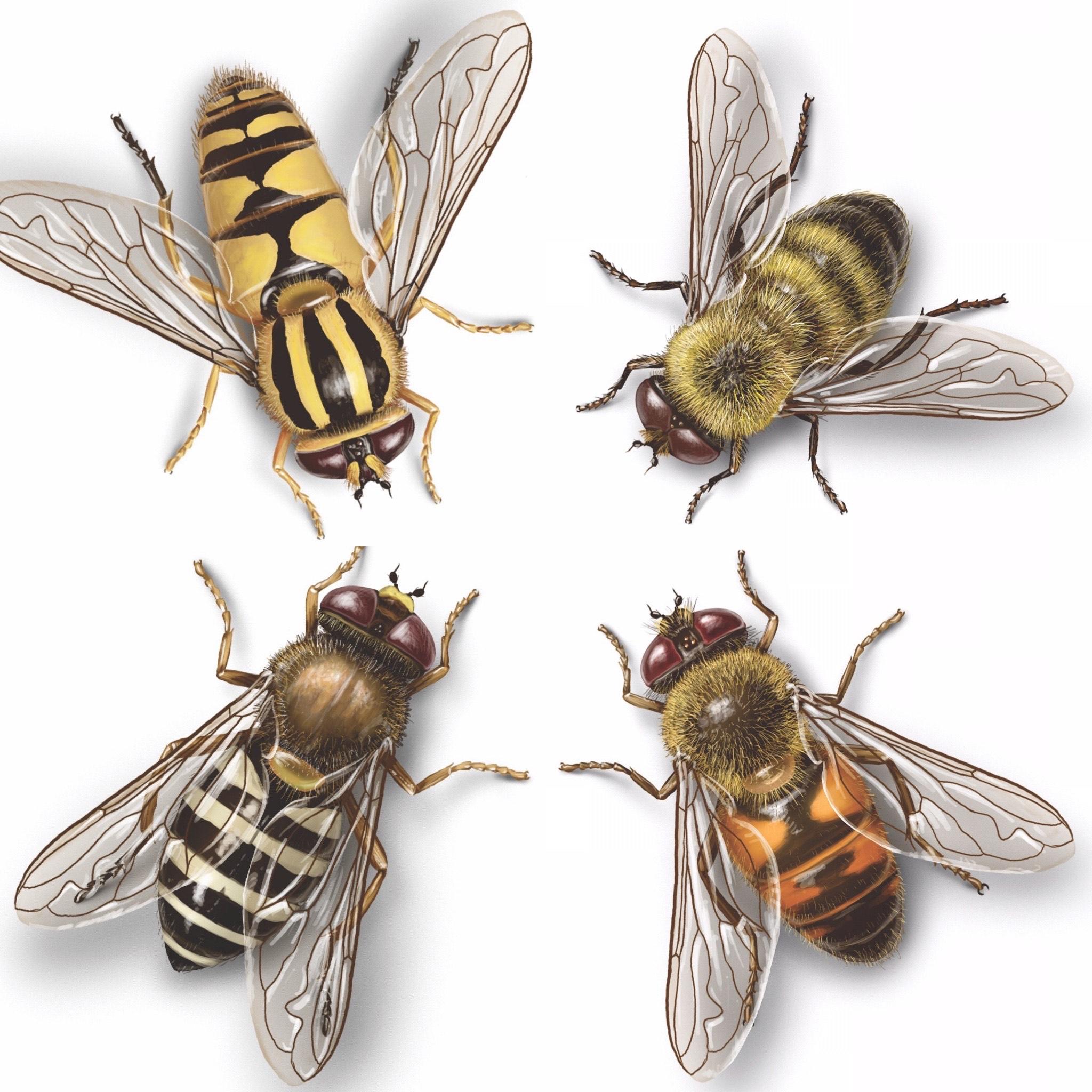
Heliophilus pendulus (top left), Mallota posticata (top right), Eupeodes sp. (bottom left), Eristalis tenax (bottom right).
Illustration by Steve Buchanan