
FRIDAY
June 24, 2022 | NOON-1:30PM PT/3:00PM-4:30PM ET
Pollinator Myth Busters!
Scientists: Dr. Kristen Lear, Mace Vaughan, and Dr. Vicki Wojcik, moderated by Jessica Fox
Do all bees sting? Do butterflies have tongues? Do moths only fly at night? What plants do beetles pollinate? Why are bats beneficial? We’re putting together a Pollinator Power Panel of scientists to bust myths about pollinators.
Do you have a question or myth you’d like answered? Send it to us on social media using #PowerInPollinators. We’ll ask our panel to give us the real story about pollinators.

Kristen Lear, Ph.D., Bat Conservation International Agave Restoration Program Manager
Dr. Kristen Lear leads BCI’s Agave Restoration Initiative to restore critical foraging habitat for threatened and endangered pollinating bats in the U.S. Southwest and northern Mexico.
She got her start in bat conservation in 6th grade when she built and installed bat houses for her Girl Scout Silver Award project, and since then has worked on bat research, conservation, and education projects around the world.
Dr. Lear came to BCI in 2020 after completing her PhD in Integrative Conservation at the University of Georgia, where she studied the relationship between pollinating bats, agave plants, and rural Mexican communities and how conservation efforts can simultaneously promote bat conservation and rural livelihoods.
Dr. Lear is a National Geographic Explorer and AAAS IF/THEN Ambassador working to encourage girls and young women in STEM fields, and was recently highlighted through BCI’s collaboration with the “I Am A Scientist” program for K-12 classrooms. She is passionate about outreach and sharing the amazing world of bats with the public through school and community presentations, bat walks, and hands-on kid’s activities.
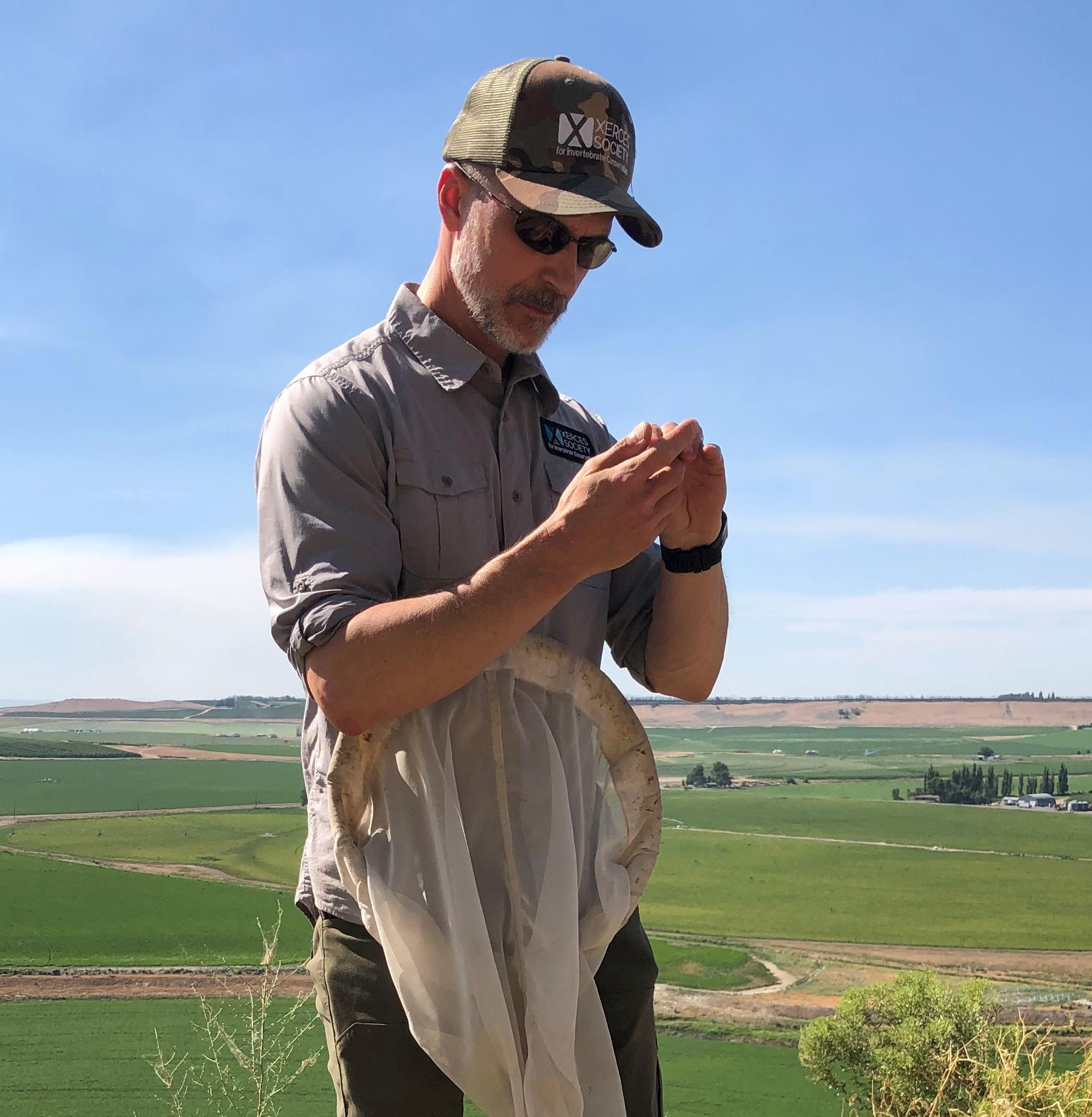
Mace Vaughan, Co-Director, Pollinator Conservation and Agricultural Biodiversity at Xerces Society for Invertebrate Protection
Mace Vaughan serves as the Xerces Society’s Pollinator and Ag Biodiversity Program Co-Director and as a Partner Biologist and Conservation Entomologist to the USDA Natural Resources Conservation Service’s (NRCS) West National Technology Support Center in Portland, Oregon. Mace has over 20 years of experience working on insect and pollinator conservation issues across the U.S. and abroad. His strategic approach to conservation has included work on federal and state policy, restoring habitat, writing guidelines, teaching diverse audiences, conducting and guiding research, and monitoring. He has led Xerces’ Pollinator and Ag Biodiversity Conservation Program since 2003 and served as a Partner Biologist to the NRCS since 2008. Mace now co-leads the largest pollinator conservation program in the world, supervising a team of over 25 pollinator conservation specialists stationed across the U.S.
Mace has written numerous articles on the conservation of bees, butterflies, aquatic invertebrates, and insects, and is co-author of the books Attracting Native Pollinators: Protecting North America’s Bees and Butterflies, Farming with Native Beneficial Insects, and the Pollinator Conservation Handbook. He is the lead author of Farming for Bees: Guidelines for Providing Native Bee Habitat on Farms. He was a lecturer on honey bee biology and beekeeping at Cornell University, from which he holds Masters Degrees in Entomology and in Teaching. Mace has conducted research into the behavior and community ecology of insects and has worked as an insect wrangler and bee expert for PBS Nature.

Vicki Wojcik, Ph.D., Director of Science with Pollinator Partnership
Vicki has been working to protect and promote pollinators with Pollinator Partnership since 2011. As Director she oversees P2 Canada's research and programs, keeping on top of new and emerging pollinator issues and managing programs that includes pollinator habitat conservation and landscape management assessments; understanding and enhancing agroecosystems; landuse and pesticide policy review; support for threatened and critical species; and ecosystem service assessments in Canada.
Vicki joined the San Francisco team after completing her Ph.D. in Environmental Science, Policy, and Management at UC Berkeley. In 2015 she returned home to Toronto with the expansion of P2 Canada. Vicki’s interest in pollinators was sparked during her undergraduate studies at the University of Guelph and has continued ever since. Her graduate research focused on understanding how native bees use gardens and habitats in cities. This focus on pollinators in human-dominated landscapes has continued throughout her career.
Vicki’s contributions to pollinator research and conservation include numerous peer reviewed papers, book chapters, policy pieces, planting guides, and technical manuals. The outdoors has always been calling this city girl who enjoys skiing, sailing, hiking, and any excuse to get out of town.